
On average, the salary of a primary and secondary school teacher in Mexico is $9947-11761 Mexican pesos per month.
In fact, education and related professions rank fourth among the most studied careers in Mexico and, nevertheless, it is one of the least remunerated if the importance of teachers for the development of a nation and its citizens is considered.
The annual salary expectation is 130-150 thousand pesos on average. That is, around 8-10 thousand dollars annually.
Annual salary of a special education teacher in Mexico
The annual salary of a special education teacher in Mexico can increase by up to 25% in Mexican pesos compared to a regular teacher’s salary, due to the recognition of these types of master’s degrees. Particularly for those who hold a degree in intervention in learning problems or in special education.
In addition to the factors previously mentioned, it is important to consider that the salary of a special education teacher can vary significantly depending on the federal entity and the type of institution where they work. Likewise, the type of institution influences remuneration; private schools usually offer higher salaries compared to public ones. These factors, along with the teacher’s experience and academic background, are determining factors in salary perception within the field of special education in Mexico.
Special education in Mexico
Special education is an educational modality dedicated to providing support and pedagogical strategies to students with learning difficulties or disorders with the aim of achieving successful integration into their educational environment, but above all, developing their cognitive abilities at their own pace and time.
In Mexico, most jobs for the care of people with disabilities require a master’s degree or specialization in special education, educational psychology, or intervention in learning difficulties, in addition to years of experience in this area.
The demand is due to the fact that it is an activity that directly impacts the well-being of children, their quality of life, and possibilities for learning and autonomy.
What is the difference between a special education teacher and a general education teacher?
A special education teacher is someone who has decided to offer their knowledge and preparation in education to students and people with developmental difficulties or learning disorders.
We are talking about a person with human qualities such as empathy, patience, and an interest in accompanying others in their learning process.
The special education teacher has an academic preparation that differs from that of a regular teacher in that they know in depth the pathologies that trigger a learning disorder or a disability, have the tools to detect any difficulty early, can develop work programs and strategies that consider the value and peculiarities of each student and help them channel their cognitive potential.
In summary, the special education and inclusive education teacher is invaluable support for the philosophy of education and the school for all. And for students, they become a tutor or companion not only in the school process but in a broader scope that includes socialization experiences, counseling, and accompaniment in job integration and other aspects and dimensions of the life of a person with a disability.
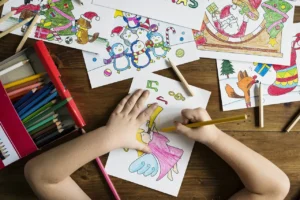
Special education training aims to train a highly demanding, committed, and socially sensitive educator with didactic-pedagogical preparation that guarantees their performance in caring for people with special educational needs, to whom they can provide psycho-pedagogical guidance and advice to the student, their parents, and regular education teachers.
Importance of special education in Mexico
Historically, Mexico has attributed state interest to special education. Therefore, it is considered a priority part of the structure of the Educational System, at least in theory. Since the 19th century, the right to education for deaf-blind and mute individuals was established.
From the 1990s, there was an evolution in the educational approach for students with special learning conditions. The educational and social conception of disability replaced the medical-rehabilitative one, and importance was given to the child actively participating in their learning process. Likewise, research in special education received official support.
Simultaneously, the separation of educational establishments into “regular” and “special” was questioned, and since then, the integration of the school for all and the participation of students with disabilities in the classroom has been promoted.
Without the separation of schools and with the focus on a school for all, since 1993, educational plans and programs in Mexico have been integrationist, academic, and life-skills oriented.
Special education is present with the Multiple Attention Centers (CAM) and the Regular Education Support Service Unit (USAER), which constitute transition centers as we see below:
- Multiple Attention Centers
With the aim of integrating students with disabilities or developmental problems into the regular education system, special schools disappeared, and in their place, Multiple Attention Centers were created to provide educational guidance, early intervention, vocational training, and job skills for children and young people with disabilities. The purpose is for children to subsequently integrate into regular school and reach their corresponding grade level. In addition to training in self-care and autonomy. These are centers where the child will stay on a transitional basis before joining regular school.
- Regular Education Support Service Unit
These are units created to provide services to students with disabilities who are integrated into regular schools. These units employ a multidisciplinary and itinerant team that attends to students, teachers, and parents. The purpose of these units is to improve the quality of education and modernize teaching practices, considering the most appropriate strategies, methods, and approaches for the educational success of students with disabilities.
In Mexico, there are around 556,579 students in these educational centers, according to figures from the National Institute for Educational Evaluation. Special education teachers dedicated to teaching and guidance in these centers number 40,671.
If compared to the more than 600 thousand primary regular education teachers in Mexico and the 42 thousand students that IMCO currently registers as studying the primary education career, then we are facing a gap in the educational services provided to children and adolescents with particular learning conditions.
What is the salary of a special education teacher in Mexico?
Now that you know more about the salary landscape of this profession, your interest in pursuing a specialization in special education or therapeutic psychopedagogy can materialize today thanks to the academic offer that ISEP University has opened in Mexico for professionals in education, psychology, or any career related to the care of people with disabilities or alterations in learning processes.
With a trajectory of over 35 years, the leading online specialized training university in the areas of psychology, education, speech therapy, neuroscience, and business currently has enrollment open for nine Master’s degrees in Education.
The Master’s in Special Education has a robust training program focused on equipping professionals with skills to work towards an open school centered on the student and their needs. This training has Official Recognition of Study Validity granted by Mexican educational authorities.
Consult an academic advisor for financing options and study modalities.
Solicitar más información
Completa el formulario y un asesor te contactará en menos de 24 horas hábiles.
Los campos obligatorios están marcados *