
Education is a treasure that plays an important part in our society. It has recently been shaken for several reasons, one of them stemming from the COVID-19 pandemic, which confronts us with an educational crisis and a new school normal.
After two years of suffering a strong impact from this pandemic, education has been involved in several situations that have triggered severe disruptions. The right to go to school and learn is fundamental for the development, safety, and well-being of all children. However, classrooms remain closed in many countries while social activity continues in restaurants, party halls, gyms, etc.
The child and youth population cannot afford to suffer more interruptions in their education, which is why an alternative school training system, such as the hybrid model, was implemented.
Revisiting Rama’s idea (2021), a difference between educational modalities, in-person and distance, is that in in-person education, access to knowledge is limited to the presence of the educator, whereas with technology, the human body of the teacher as a mechanism of transmission and teaching is reduced.
Hybrid Education: A New School Normal
Hybrid education is an instructional model where teaching occurs both in-person and online, to provide learning according to the needs of each student group. Currently, there is a need to implement this model from basic education, and efforts are being made to establish this new school normal despite the needs and areas of opportunity we have in Mexico.
The aim is that by using virtual learning environments, knowledge can continue to be provided and transmitted to students, and time is not wasted without them learning. This leads schools and teachers to develop new learning strategies, with the teacher being aware of what is being experienced with this simultaneous in-person and virtual educational process.
For parents, it has also been a challenge to manage the situation, not only the work aspect but also the fact of working from home, or if attending work in person, having to leave children somewhere, take them to work, who will take care of them and contribute with daily activities, including school ones. It has been a complicated scenario for them, coupled with the concern that children are not learning enough.
For parents, this is a situation that constantly worries them; they fear for the safety of their children when sending them in person and prefer to have them at home. But at the same time, they are also concerned about having them at home without daily activities, that they are only playing video games without extracurricular activities, that the activities carried out in schools are few and not enough is learned, that children do not show interest in virtual dynamics, or conversely, that there are too many activities and not enough time to support them, and to be both parents and guiding teachers for their children.
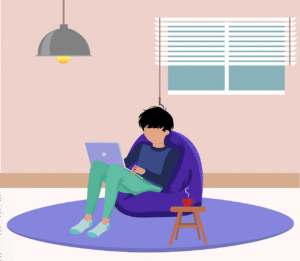
As Ríos (2021) mentions, education is going through difficult times, through a school normal that had not been seen before and was much less expected. Therefore, we must adapt to traditional education models, recognize that each teaching modality has its advantages and disadvantages, but that the current educational culture must change and be worked on.
The effort of teachers at each level of education must value what it means to work in this situation where uncertainty and fear prevail in the face of health events and social, labor, and economic consequences, in which we have all been affected. The teacher’s work has played a primary role that has gone far beyond pedagogical aspects in order to guarantee a transition and maximize the use of the resources we have today.
That is, the educational methodology must consider the changes that arise from teaching when using different resources, such as information and communication technologies (ICT) due to the interactivity they imply, stimulating emotional and cognitive capacities.
It took us by surprise; we were not prepared for such a radical change, children and adults alike, as parents have had difficulties adequately supporting their children, mainly due to unfamiliarity with pedagogical strategies and content.
Undoubtedly, the pandemic has awakened a series of feelings in the entire world population. The confinement caused by COVID-19 has generated feelings of despair, stress, frustration, and anxiety.
A word that stands out very clearly among parents and children is the term “complicated,” meaning it has been difficult for them to name their emotions and feelings present during this time.
This time has not allowed us to reflect on the different roles that school plays within society, and it’s not just about the function of transmitting knowledge, but also the cultural and social function. Children have been affected by this new school normal by not having the possibility to continue developing their socio-emotional skills within the classroom.
We know that the difficulties parents and children have had to face from home are not only related to deficiencies, technical problems related to ICT, lack of equipment, internet, but also with the difficulties of having to cover several roles. However, we have seen that the effort has been present and is valued.
For children, it has not been easy to have to learn from home and do their best to learn and adapt to this hybrid education; they miss school for everything it implies: teachers, schedules, in-person classes, but above all, socializing with their classmates. Every effort will continue to be made so that the situation allows education to fulfill its function as much as possible (Vázquez, Bonilla, and Acosta, 2020).
Bibliographical References
Ríos, Y. Y. (2021) Post-pandemic teaching: challenges and trends in hybrid education. Revista Plus Economía. 9 (2). 107-112. Retrieved from: http://revistas.unachi.ac.pa/index.php/pluseconomia/article/view/504/436
Rama, C. (2020) The new hybrid education. In Cuadernos de Universidades. No. 11 https://www.udual.org/principal/wp-content/uploads/2021/03/educacion_hibrida_isbn_interactivo.pdf
Vázquez, M. A., Moreno, Bonilla, W. T., & Acosta, L. Y. (2020). Education outside of school during the COVID-19 pandemic. Experiences of students and parents. Revista electrónica sobre cuerpos académicos y grupos de investigación, 7(14), 111-134. Retrieved from https://cagi.org.mx/index.php/CAGI/article/view/213
About the author: Lic. Flor Anahí González Montoya
Bachelor’s Degree in Preschool Education. Currently pursuing a Master’s degree in intervention for learning difficulties and a postgraduate degree in early intervention.