
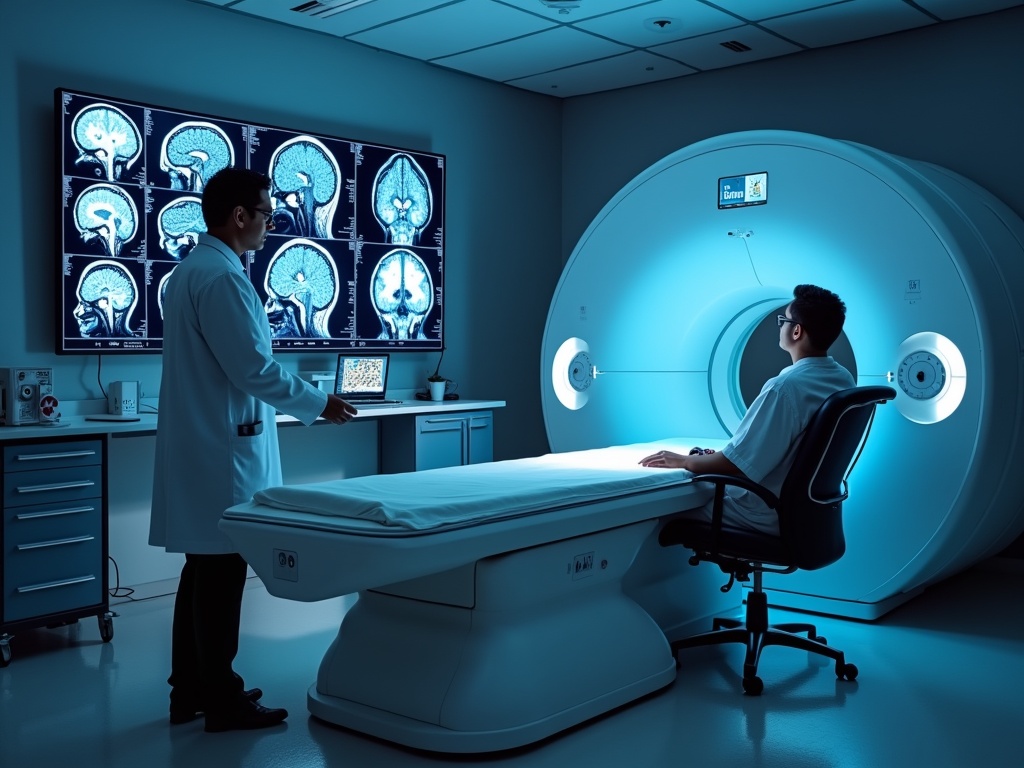
Applied Neuroimaging: key for early detection of Alzheimer’s in Mexican patients
Estimated reading time: 8 minutes
Key Conclusions
- Applied neuroimaging allows detecting subtle changes in brain structure and function, facilitating early Alzheimer’s diagnosis.
- Techniques such as Magnetic Resonance Imaging (MRI), Positron Emission Tomography (PET), and Computed Tomography (CT) offer innovative tools in clinical practice.
- The integration of artificial intelligence increases diagnostic accuracy, allowing the identification of patterns that might otherwise go unnoticed.
- Early diagnosis contributes to improving the patient’s quality of life and optimizing therapeutic interventions.
- Interinstitutional collaboration and specialized academic training are key to overcoming challenges in Mexico.
Table of Contents
Introduction
Applied neuroimaging is a revolutionary field that uses advanced imaging techniques to observe, analyze, and quantify brain structure and function. This discipline has become an essential tool for detecting early signs of Alzheimer’s, especially in a context like Mexico, where aging and cognitive diseases challenge the healthcare system.
Throughout this article, we will explore the most advanced imaging techniques, the impact of artificial intelligence on the analysis of these images, and the importance of robust academic training, such as that offered by Universidad ISEP, to transform the approach to Alzheimer’s.
Contextualization and Clinical Relevance
Applied neuroimaging brings together various techniques that generate precise images of the central nervous system. This allows medical professionals to detect subtle changes in brain structure and function, identifying early alterations associated with Alzheimer’s.
- Fundamentals of applied neuroimaging:
– High-resolution visualization of brain structure.
– Analysis of blood flow, metabolic activity, and functional status of specific regions.
– Identification of biomarkers such as beta-amyloid plaques.
Neuroimaging Techniques in Alzheimer’s
Among the most prominent techniques are:
- Magnetic Resonance Imaging (MRI): Allows detection of cortical atrophy and volumetric changes in key structures, such as the hippocampus, indicating early signs of the disease.
- Positron Emission Tomography (PET): Stands out for revealing the accumulation of beta-amyloid plaques using radioactive tracers, providing a functional view of neuronal deterioration.
- Computed Tomography (CT): Complements the diagnosis by ruling out other pathologies and confirming findings when integrated with other imaging techniques.
- Integration of Artificial Intelligence (AI): The implementation of AI algorithms, such as neural network models, improves the detection of subtle patterns and reduces erroneous diagnoses. Learn more about our Master’s in Artificial Intelligence.
Importance of Early Diagnosis
Early detection of Alzheimer’s is fundamental for applying both pharmacological and non-pharmacological treatments before cognitive deterioration becomes irreversible. This approach allows for:
- Improve therapeutic management: Personalized interventions and preventive strategies adapted to each patient. Discover more in our Master’s in Digital Health.
- Optimize quality of life: Planning of care and comprehensive support that mitigates the emotional and social impact of the disease.
- Facilitate continuous monitoring: Longitudinal studies that allow for treatment adjustments and evaluation of deterioration progression.
Focus on the Mexican Population
Alzheimer’s in Mexico presents particular challenges, where genetic factors, lifestyles, and socioeconomic conditions influence its progression. It is essential to understand:
- Risk factors and cultural differences: The prevalence of chronic diseases and cultural aspects influence diagnosis and treatment.
- Adapted protocol and local studies: The need for clinical protocols and multicenter studies that collect relevant data for the population.
- Role of academic institutions: Centers like Universidad ISEP train professionals capable of integrating theory and practice in applied neuroimaging.
- Innovation in medical technologies: Explore our Master’s in Medical Technologies to learn about innovative approaches.
Conclusions and Future Perspectives
The integration of applied neuroimaging in early diagnosis represents a paradigm shift in Alzheimer’s management. Current advances allow for:
- Early detection: Allowing preventive strategies to be initiated before deterioration becomes irreversible.
- Precise monitoring: Through longitudinal analyses and AI tools, ensuring timely adjustments in therapeutic interventions.
- Specialized training: Collaboration among institutions, health centers, and academic programs is vital to face present and future challenges.
- Future perspectives: It is necessary to promote multicenter studies, strengthen professional training, and promote public policies that facilitate access to cutting-edge technology. Learn about our Master’s in Innovation and Technology to prepare for these challenges.
Frequently Asked Questions
-
What is applied neuroimaging?
It is the use of advanced imaging techniques to evaluate brain structure and function, allowing the detection of early alterations associated with neurodegenerative diseases such as Alzheimer’s.
-
How does artificial intelligence help in diagnosis?
AI enhances image analysis by identifying subtle patterns and improving diagnostic accuracy, reducing the possibility of errors and allowing earlier interventions.
-
What are the main challenges for its implementation in Mexico?
Challenges include unequal availability of technology, high equipment costs, and the need for continuous training of medical personnel, aspects that require interinstitutional collaboration and appropriate public policies.
Sources of information and references:
Solicitar más información
Completa el formulario y un asesor te contactará en menos de 24 horas hábiles.
Los campos obligatorios están marcados *