
Brain gym is very effective and contributes to overall health. Its continuous practice optimizes learning processes, helps express your ideas better, memorize, increase creativity, and facilitates stress management. Talking about brain gym is appealing to scientific knowledge.
Many initiatives focus on stimulating motor activities, simultaneously with both limbs, but developing different movements in each limb. In this way, the right cerebral hemisphere (which controls the left limbs) works coordinately with the left cerebral hemisphere (which controls the right limbs), maximizing the use of both.
These activities are easy to teach and pleasant to learn, reminding us of the cherished motor games of childhood. Audiovisual resources provide an excellent contribution to the psychoeducational purposes of health and education professionals who apply these techniques for the benefit of their patients and students.
The Principles of Brain Gym
These are simple, effective, didactic, fun, and easy-to-learn exercises that, with psychoeducational skills, can be taught to children, adults, and the elderly as recreational practices. Forming Brain Gym habits is fundamental; these exercises involve concentration, eye and limb movements, muscular flexibility, body and visuospatial coordination, psychophysiological activation, relaxation practices, among others; as they are based on three scientifically proven principles:
- The brain learns more effectively when there is emotional and sensory stimulation (auditory, visual, tactile).
- Communication and coordination between the cerebral hemispheres through the brain’s corpus callosum is strengthened when limbs must be mobilized and coordinated in dissimilar directions or movements.
- We learn by imagining and playing, because if you use your imagination, you activate sensorimotor patterns in relation to your emotion and memory.
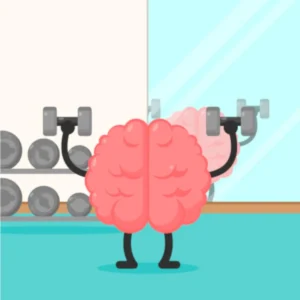
Depending on the exercise, which in the case of older adults should preferably be instructed by an occupational therapist, physical therapist, or psychologist, the practitioner receives multiple benefits. These exercises can be practiced by anyone of any age to improve their learning, brain plasticity, and therefore their health, as the brain is an organ that, like others, must be cared for.
Benefits of Brain Gym
It is a didactic tool that can be used in the development of different psychoeducational purposes and cognitive decline rehabilitation. Below are some of the most significant benefits:
- Integrates brain functions, improving learning, memory, concentration, and attention processes by coordinating movement, vision, and hearing, enhancing hand-eye coordination, and increasing synaptic connections.
- Promotes the activation and communication of both cerebral hemispheres, forming more neural networks, and preparing the brain for a higher level of reasoning. By demanding greater participation from the right cerebral hemisphere, it directly stimulates creativity and the ability to visualize and strengthen brain representations.
- Maximizes muscle activation, facilitating alertness and balance of nervous activation, improving equilibrium. This activation, coupled with its didactic/recreational nature, connects emotions in the brain’s limbic system, reducing stress levels and relaxing the body.
- Strengthens the development of self-care behaviors and treatment adherence, as it offers hope within the grief of assuming the process of progressive cognitive decline in older adults. Elements like self-esteem are strengthened thanks to perceived self-efficacy when performing these types of activities. Small psychomotor challenges provide a component of “meaning” to the daily life of older adults, which, when performed under psychotherapeutic supervision, can generate new meanings about understanding their condition and the tools to cope with it.
Contributions to Older Adults
Its benefits are observed in the long term. By developing a greater number of synaptic connections, it slows cognitive decline; neurodegenerative brain diseases like Alzheimer’s progress more slowly. This benefits caregivers and the elderly in the long term, as the coordinated performance of these exercises leads to an increase in neurotropin (the natural neuronal growth factor) and a large number of neural connections.
Other areas of strengthening include autonomy, self-care, and self-esteem in cognitive behavioral therapy for older adults. Physical activity itself generates a sense of well-being, which, combined with perceiving oneself as an active and effective participant in performing self-care tasks, generates great personal satisfaction. It is common to see grandparents smiling while doing their exercises; this alone is a gain.
Transcending Cognitive Decline
It is fundamental to perceive its scope within the family unit; adults, adolescents, and children can significantly benefit from its practice, not only by supporting grandparents by accompanying them in their routines but also by integrating the scope of these practices into the human development of the entire family unit. This is enhanced by having exercise routines for all ages.
A widely benefited group are the youngest members of the household, whose brain grows 80% of its size in the first three years of life, with impressive brain plasticity, coupled with an unprecedented active learning process in human evolutionary development, where Brain Gym exercises in childhood represent a gift for their neuronal development and strengthening of higher cognitive processes such as creativity.
Solicitar más información
Completa el formulario y un asesor te contactará en menos de 24 horas hábiles.
Los campos obligatorios están marcados *