
The design of effective assessment instruments is a crucial aspect of education that helps educators assess learning outcomes and identify areas for improvement. In this article, we will explore various types of educational assessment instruments, including observation techniques and written evaluations, and analyze how to design and construct effective assessment instruments for learning and competency analysis. We will also examine how these assessment instruments can be adapted to different educational levels and offer examples of how they can be used to achieve specific goals for improving performance, practice, environment, and education-related elements.
Join us as we delve into the world of educational assessment and explore the design of assessment instruments that can help students reach their full potential.
Objectives of Educational Assessment
The main objective of educational assessment is to refine the teaching and learning process. Teachers can identify their students’ strengths and weaknesses and review their teaching approaches through assessment. This allows for the recognition of areas needing improvement, which can lead to the invention of more effective tactics. Additionally, assessment results can be used to provide information to students, parents, and administrators, fostering a more positive learning environment. Tools for teachers, such as rubrics and observation guides, are beneficial in ensuring that the assessment process is equitable, consistent, and impartial.

Another significant purpose of educational assessment is to measure how well learning objectives have been achieved. Through assessment, educators can gauge whether their teaching strategies have been successful in helping students acquire and develop new skills. Assessment can also be used to evaluate the success of educational programs and identify areas that need improvement. By pinpointing areas needing improvement, teachers can devise strategies to address them and enhance the overall quality of education. In conclusion, the objectives of educational assessment are to foster effective pedagogical approaches and ensure that students reach their full potential.
Types of Assessment Instruments
Assessing the success of teaching and learning is a fundamental task that must be carried out properly. To achieve this, educators can leverage the various tools at their disposal, such as observation guides, class journals, and attitude scales.
Observation guides offer a systematized way to record student behavior, social interactions, and learning outcomes. Through them, teachers can evaluate their students’ abilities in terms of cooperative learning, problem-solving, and social competencies.
Class journals are notebooks where teachers can record their observations and reflections on their students’ progress. These journals can be used to measure students’ level of enthusiasm, engagement, and involvement in class activities. Additionally, they can be a useful tool for detecting learning difficulties and providing personalized support. These notebooks can also be used to track student learning progress and modify teaching strategies accordingly.
Attitude scales are another type of instrument used in Education, designed to measure students’ feelings, beliefs, and values in relation to a specific topic, such as motivation or social issues. Through them, educators can gain a better understanding of their students’ perspectives, interests, and inclinations and use this knowledge to improve the quality of their educational programs. Attitude scales can also be used to assess the influence of teaching on students’ attitudes and highlight areas that need improvement.
Observation Techniques
Educational assessment is an invaluable tool for gaining insight into the teaching-learning process. By using observation strategies, teachers can gather significant data about their students and their pedagogical approaches. There are various ways to assess through observation, such as using scales, notebooks, or audiovisual protocols. These techniques can help teachers acquire data on student behavior, preferences, and academic progress. Observation can be formal, such as using a structured guide, or informal, such as taking anecdotal notes. Whatever method is used, observation can provide useful information about the teaching and learning process.
When designing observation guides, it is important to consider the type of information to be collected. For example, a guide for evaluating student behavior might include categories such as contribution, enthusiasm, and collaboration. A guide for evaluating teaching methods might include categories such as planning, presentation, and assessment. The use of observation in education is not limited to the classroom, as it can also be used to measure the effectiveness of educational programs, facilities, and resources. In summary, observation techniques are a powerful tool for educators and can provide valuable insights into the teaching and learning process.

Written Assessments
Assessing student learning and progress requires a comprehensive approach, which includes written assessments. These can range from essays and exams to questionnaires and reports, providing educators with a complete view of the student’s understanding and application of the material. Written assessments are also an excellent way to provide feedback to students, helping them develop their skills.
The use of assessments has a number of advantages. They can measure a range of skills, such as problem-solving, critical thinking, and communication. Open-ended questions can be used to evaluate the student’s creative ability and their skill in expressing their thoughts and ideas. Additionally, they are a useful tool for measuring knowledge retention, as the student must be able to recall and apply the material.
When designing written exams, it is important to consider their level of difficulty. Questions should pose a challenge to the student, testing their understanding of the subject matter, but should not be so difficult as to discourage them. Furthermore, assessments should be consistent with the course’s learning objectives and the skills the student is expected to acquire. By creating well-crafted written assessments, educators can accurately evaluate student learning and provide useful feedback to aid in skill development.
Adapting Assessment Instruments to Different Educational Levels
When designing assessment tools, it is essential to consider the educational level of the individuals being assessed. Developing assessment instruments that are adapted to different educational levels requires thorough planning to ensure that the assessment is relevant and accurate. For example, a rubric designed for high school students may not be appropriate for primary school students, as the objectives and capabilities differ significantly between the two levels.
One methodology for adapting assessment tools is to use appropriate wording and terminology for the individuals’ educational level. This requires avoiding intricate words and ideas that may be beyond their comprehension. Additionally, it may be essential to adapt the structure and format of the assessment to the individuals’ cognitive abilities. For example, younger individuals may benefit from visual aids or simpler instructions.
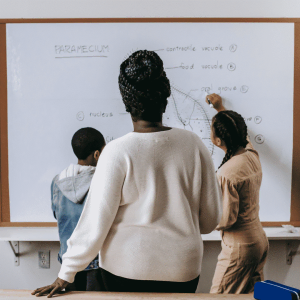
Another important aspect when adapting assessment tools is the cultural background of the individuals. For example, an assessment that relies heavily on written responses may not be suitable for individuals whose native language is not English. In this case, it may be necessary to offer alternative assessment formats, such as oral presentations or group projects. It is fundamental to ensure that the assessment is impartial and equal for all individuals, regardless of their background or abilities.
Conclusion
In conclusion, designing effective educational assessment instruments is crucial for improving education-related elements such as performance, practice, and environment. Observation techniques and written evaluations are valuable tools for assessing student progress, and the use of guides, scales, and rubrics can aid in the construction of these instruments. Adapting assessment instruments to different educational levels is also important to ensure accurate and fair evaluations. By using a variety of techniques and educational instruments, professionals can gain a comprehensive understanding of students’ skills and areas for improvement, ultimately leading to better educational outcomes.
Solicitar más información
Completa el formulario y un asesor te contactará en menos de 24 horas hábiles.
Los campos obligatorios están marcados *